Tooth Replacement Options After a Tooth Extraction
After a , restoring function and appearance is a priority to maintain your oral health. Many individuals require this procedure due to decay, trauma, or advanced gum disease, and the space left behind should not remain untreated. Understanding available tooth replacement options helps ensure you preserve proper bite alignment, chewing efficiency, and long-term dental stability after an extraction.
The impact of missing teeth on oral health
When a dentist removes a tooth during an extraction, the surrounding teeth gradually shift toward the space left by the missing tooth. This movement can disrupt the alignment of the entire bite, leading to increased wear on the remaining teeth's enamel. Furthermore, the jawbone requires constant stimulation from natural tooth roots to maintain its density. Without this stimulation, the body begins to break down the bone tissue, which may change the patient's facial structure and lead to a sunken, older-looking appearance. Fortunately, addressing the gap created by a tooth extraction preserves the integrity of the jaw and prevents future orthodontic complications.
Dental implants
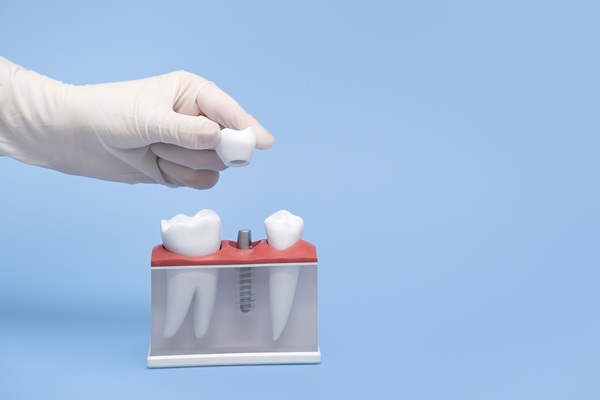
Dental implants are considered the modern standard for replacing missing teeth. This tooth replacement option replaces both the root and the crown. Dental implant treatment involves the surgical placement of a titanium post into the jawbone, which serves as a sturdy foundation for a porcelain crown. With the right care, they are designed to last for several decades.
There are several advantages to dental implants. For example, implants are the only restorative option that actively prevent bone loss by stimulating the jaw in a manner similar to natural tooth roots. Additionally, this method does not require the dentist to file down the enamel of the surrounding teeth for support, as they would for a dental bridge.
Fixed dental bridges
A fixed dental bridge offers a reliable, non-surgical alternative for those seeking to quickly fill a gap after a tooth extraction. This prosthetic consists of an artificial tooth, or pontic, that is held in place by dental crowns attached to the teeth on either side of the extraction site. Bridges effectively prevent the neighboring teeth from shifting out of their correct positions.
Dental bridges can usually be completed in less time than the months required for dental implant treatment. That said, daily maintenance is required to prevent bacteria from accumulating beneath the pontic. While this option is effective, it does require the permanent modification of the adjacent teeth to support the bridge structure.
Removable partial dentures
For individuals missing multiple teeth or those seeking a cost-effective solution, removable partial dentures remain a viable choice. These appliances consist of replacement teeth attached to a gum-colored acrylic base, which is sometimes reinforced with a metal framework. Partial dentures use clasps that attach to the natural teeth to remain secure while eating or speaking.
Partial dentures are less invasive than other tooth replacement options and allow for easy removal during nightly cleaning. However, while these prosthetics do restore the appearance of the patient's smile, they may require periodic adjustments as the shape of the gum tissue changes over time. They also do not prevent bone loss, as they sit on top of the soft tissues and do not stimulate the jawbone.
Learn more about the tooth replacement options at Shiva G. Rad, D.D.S.
Selecting the right replacement after a tooth extraction is an important step in maintaining a healthy and functional smile. The team at Shiva G. Rad, D.D.S. is prepared to help you navigate these choices to find the best fit for your lifestyle. Reach out to our Ann Arbor office to learn more about our tooth replacement options or to schedule a consultation.
Request an appointment here: https://www.annarborpersonaltouchdentistry.com or call Shiva G. Rad, D.D.S. at (734) 436-0817 for an appointment in our Ann Arbor office.
Check out what others are saying about our dental services on Yelp: .
Recent Posts
Curious about when tooth extractions are needed? Read on to learn more. Tooth extraction is when the tooth is removed completely from its socket. Tooth extraction is hardly a procedure anyone looks forward to, but the majority of the procedures are fast and painless. So do not be alarmed if your dentist starts talking about…
Simple extraction and surgical extraction are the two kinds of tooth extraction. Read on to learn more about this type of dental procedure. Simple tooth extraction is done on a tooth above the gums and does not involve splitting the tooth into sections or using surgical procedures.If a tooth has suffered damage due to an…
A toothache is not an uncommon condition. Many people experience one at one time or another, in varying degrees of severity. When one hits during the night, it can affect your ability to sleep well and get the rest you need. Fortunately, there are some steps you can take to relieve the pain and discomfort.…
An abscessed tooth is a painful and serious dental condition that requires immediate care from an emergency dentist. This condition develops when a bacterial infection forms inside the tooth or gum, leading to swelling, pain, and sometimes fever. Without prompt treatment, the infection can spread to other areas of the body, making early intervention critical…